
Why Your Fleet Needs a Brain, Not Just a Map
Why Your Fleet Needs a Brain, Not Just a Map
In 2026, the "Butterfly Effect" is alive and well in the GCC. A labor strike in one port, a sudden sandstorm, or a regional demand spike doesn't just delay a shipment, it triggers a chain reaction of Silent Waste.
We’re helping logistics leaders stop playing catch-up and start playing the future.
1. Stop Chasing Tail Lights (The Visibility Gap)
Most logistics systems are reactive. They tell you what happened ten minutes ago. But by the time your dashboard turns red, the margin is already gone.
We call this the Visibility Gap.
The Symptom: You’re constantly "firefighting."
The AI Cure: Predictive Intelligence. Instead of a map that shows where you are, you need a radar that shows what’s coming. We use AI to forecast demand surges and potential bottlenecks before they even hit your GPS.
2. Logistics Tetris: Why Static Planning is Dead
Loading a warehouse or a fleet shouldn't feel like a high-stakes game of Tetris. If your labor scheduling is based on "last year's averages," you’re overpaying for downtime or losing money on overtime.
We transition your operations from intuitive guessing to Evidence-Based Management.
Dynamic Labor Intelligence: Aligning your workforce with actual, predicted production needs.
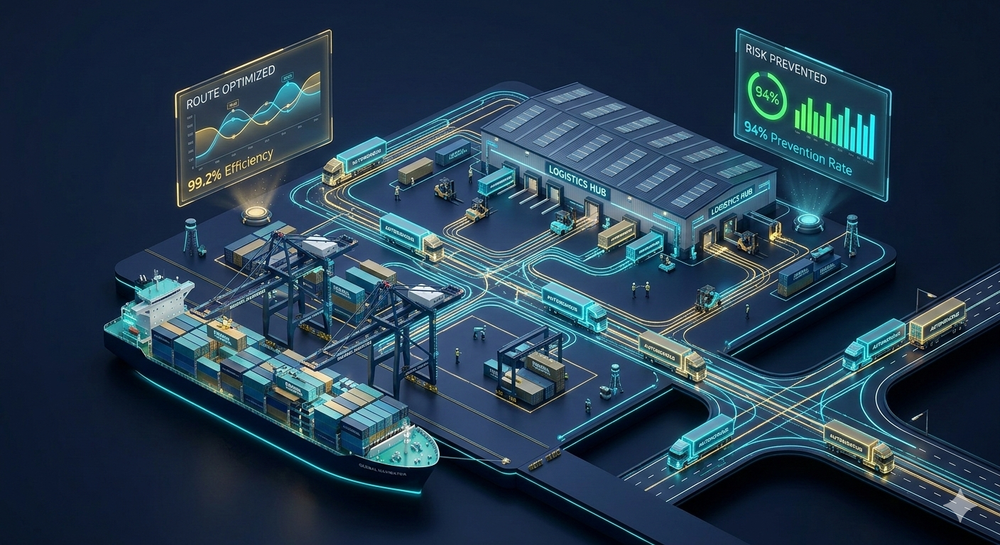
The Result: A 99.2% quality accuracy goal and a fleet that moves with the precision of a Swiss watch.
3. The Green Margin: Sustainability Isn’t a Charity
Everyone talks about "Green Logistics," but here’s the cool part: Efficiency is sustainability.
When you optimize a route to avoid an hour of idling or a 50km detour, you aren't just saving the planet, you’re protecting your EBITDA. Our AI doesn't just pick the shortest path; it picks the smartest one, considering traffic, weather, and fuel efficiency in real-time.
If you’re still relying on "yesterday’s trends," you’re already behind. It’s time to give your operations the brain they deserve.